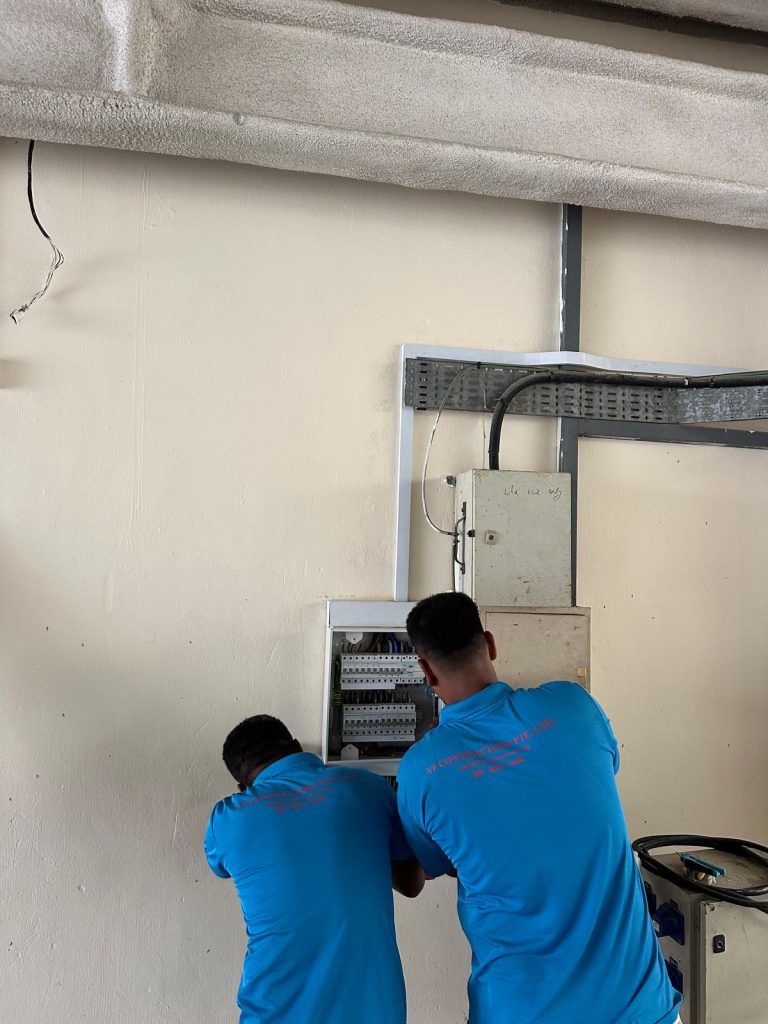
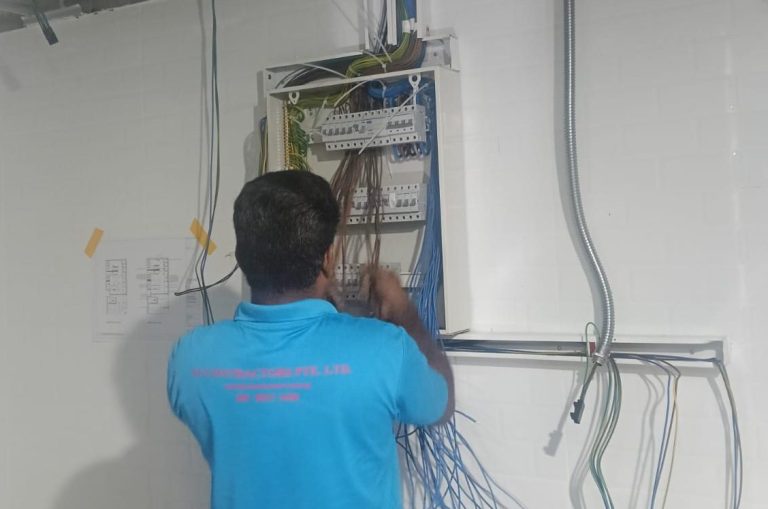
Home Electrical Wiring Safety: When Is Rewiring Needed?
Electrical wiring distributes electricity throughout your home, but much of it is hidden behind walls, ceilings and finishes. The key question is not simply how old your home is, but whether its wiring remains in suitable condition and meets the requirements of the installation.
Understanding Your Home's Electrical Wiring
How Does Household Electrical Wiring Work?
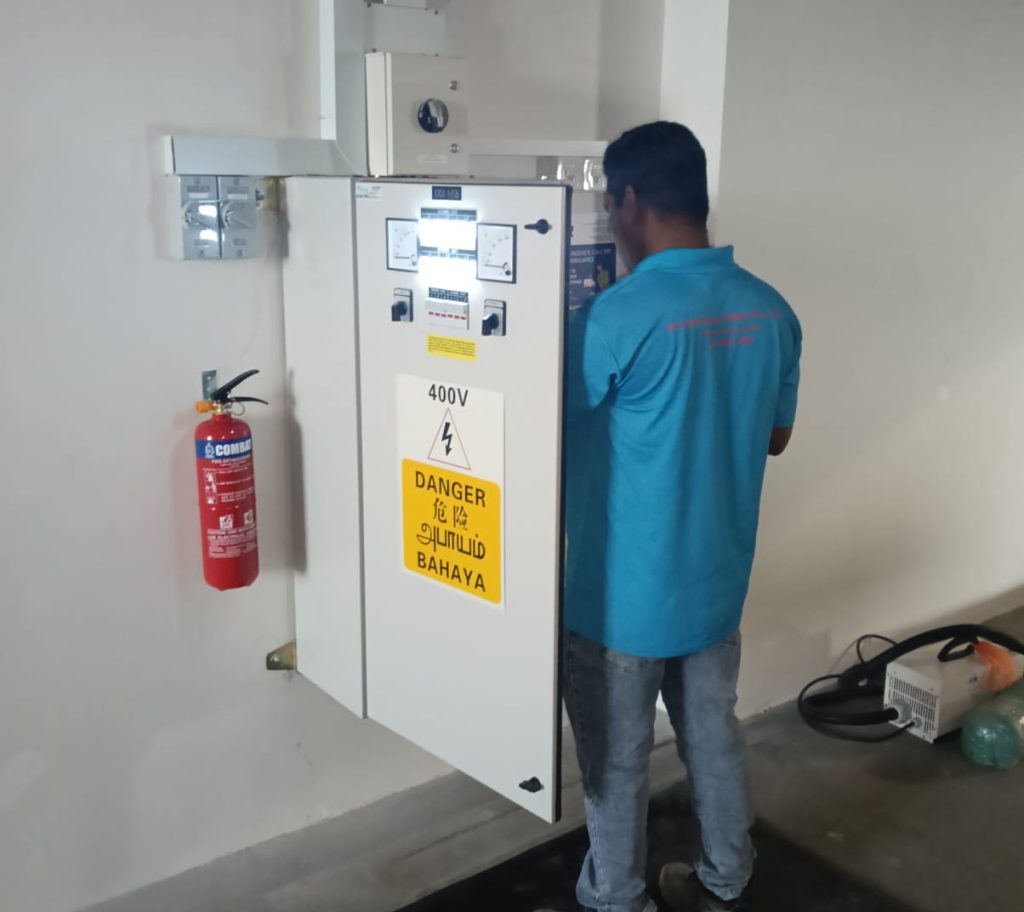
A home's electrical wiring distributes electricity to lighting, power sockets and other electrical equipment. Circuit breakers and other protective devices help protect the installation under specified fault conditions.
A typical HDB electrical wiring diagram may show the distribution board, individual circuits, switches, sockets and lighting points. However, a generic diagram may not accurately represent your flat's actual wiring routes or circuit arrangements.
If an assessment shows that some or all of your wiring needs replacing, see our residential rewiring service for HDB flats, condominiums and landed homes in Singapore.
What Are the Warning Signs of Electrical Wiring Problems?
Certain symptoms may indicate an electrical fault and should not be ignored.
Burning Smell from a Socket
A burning smell near a socket or switch may indicate overheating or an electrical fault. Stop using the affected outlet and keep away from it. If there is smoke or an immediate fire risk, move to safety and contact the appropriate emergency service.
Lights Flickering in the House
Flickering may be caused by a faulty light fitting, lamp, connection or electrical circuit. Persistent or widespread flickering should be professionally assessed rather than automatically attributed to faulty wiring.
Repeated Power Trips
Repeated circuit-breaker trips may be associated with faulty appliances, overloaded circuits, electrical leakage or wiring faults.
Visible Damage or Unknown Wiring History
Damaged insulation, exposed conductors, scorch marks or an unclear installation history may justify a professional assessment. Never touch exposed wiring or damaged electrical components.
How to Respond to Electrical Warning Signs
Stop Using Affected Electrical Equipment
If you notice a burning smell, visible damage or unusual heat around a socket, stop using the affected equipment and keep away from the area. Do not open electrical fittings or attempt to inspect concealed wiring yourself.
Observe When the Problem Occurs
Note whether the problem happens when a particular appliance is switched on, several appliances are operating together or the electrical installation is being used normally. This information may help the responsible electrical professional investigate the cause.
Avoid Repeatedly Resetting a Tripping Breaker
Repeated power trips indicate that a protective device is responding to a possible fault or abnormal condition. Do not repeatedly reset the breaker without understanding the cause. If the problem persists, arrange a professional assessment.
Arrange an Electrical Assessment
An appropriately Licensed Electrical Worker (LEW) can assess the installation, investigate the symptoms and determine whether a component repair, selected wiring replacement or a broader scope of work is appropriate.
When Should You Consider Rewiring Your Home?
An older installation, recurring electrical problems or an unknown wiring history may justify closer assessment, but none automatically proves that your entire home needs rewiring. The appropriate decision depends on the condition of the existing installation, previous alterations and the requirements of your property.
When evaluating your home's wiring, consider:
- Wiring history: Establish whether previous replacement or electrical alterations have been carried out.
- Visible warning signs: Take note of damaged accessories, exposed wiring, scorch marks or recurring electrical problems.
- Planned renovation: Consider whether changes to room layouts, appliances or electrical points affect the existing installation.
- Assessment findings: Determine which wiring can appropriately be retained and which areas require repair or replacement.
How Old Is Too Old for Electrical Wiring?
HDB states that PVC electrical cables have an estimated average lifespan of around 25 years and advises homeowners to consider replacement when that lifespan has passed or the wiring condition has deteriorated. This is guidance, not an automatic rule requiring every installation to be replaced exactly at 25 years.
Full or Partial Rewiring: Which Is Appropriate?
Partial rewiring may be suitable when specific areas or circuits require replacement and the remaining installation can appropriately be retained. Full rewiring may be considered when assessment findings support a wider replacement.
Frequently Asked Questions
How do I know if my home needs electrical rewiring?
Warning signs, recurring electrical faults or an unknown wiring history may justify a professional assessment. They do not automatically mean complete rewiring is necessary; the appropriate scope depends on the installation's condition.
How long does electrical wiring last in an HDB flat?
HDB gives an estimated average lifespan of around 25 years for PVC electrical cables. Actual condition and service life can vary, so the wiring's history and condition should also be considered.
Does flickering lighting mean the wiring is faulty?
Not necessarily. Flickering may be caused by a lamp, light fitting, connection or another electrical problem. Persistent or widespread flickering should be investigated by an appropriately qualified professional.
What should I do if I smell burning near a power socket?
Stop using the affected outlet and keep away from it. Do not open the socket or touch damaged wiring. If there is smoke or a fire risk, move to safety and contact the appropriate emergency service.
Does an older resale HDB flat always need full rewiring?
No. The age of the property alone does not determine whether complete rewiring is necessary. The condition of the existing installation, previous alterations and planned electrical work should guide the decision.
Can an online HDB electrical wiring diagram show my exact wiring routes?
A generic diagram may explain the typical arrangement, but it may not reflect your flat's actual concealed wiring routes or circuit configuration. Use property-specific records where available and seek a professional assessment when needed.
Who should assess the condition of home electrical wiring?
An appropriately Licensed Electrical Worker should assess the installation and explain whether repair, partial rewiring or more extensive replacement should be considered.
Official sources
This guide provides general information and is not a substitute for a professional electrical inspection. Electrical faults should be investigated by an appropriately qualified electrical professional. Electrical work on fixed installations in Singapore must be carried out or supervised by an appropriately Licensed Electrical Worker.
VF Contractors
Need help with an electrical problem at home?
If you are concerned about an older installation, planning a renovation or experiencing recurring electrical problems, start by understanding the condition of the existing wiring and the work your property requires.